



Peyton Watson’s upcoming contract as a restricted free agent is either one of the Nuggets’ most difficult offseason decisions or an absolute no-brainer.
Watson had a breakout season for the Nuggets, posting career-highs in points, rebounds, assists, and eFG%. His highlight reel is impressive and showcases how he’s developed as a player:
The data supports a significant leap as well. From DunksAndThrees.com:
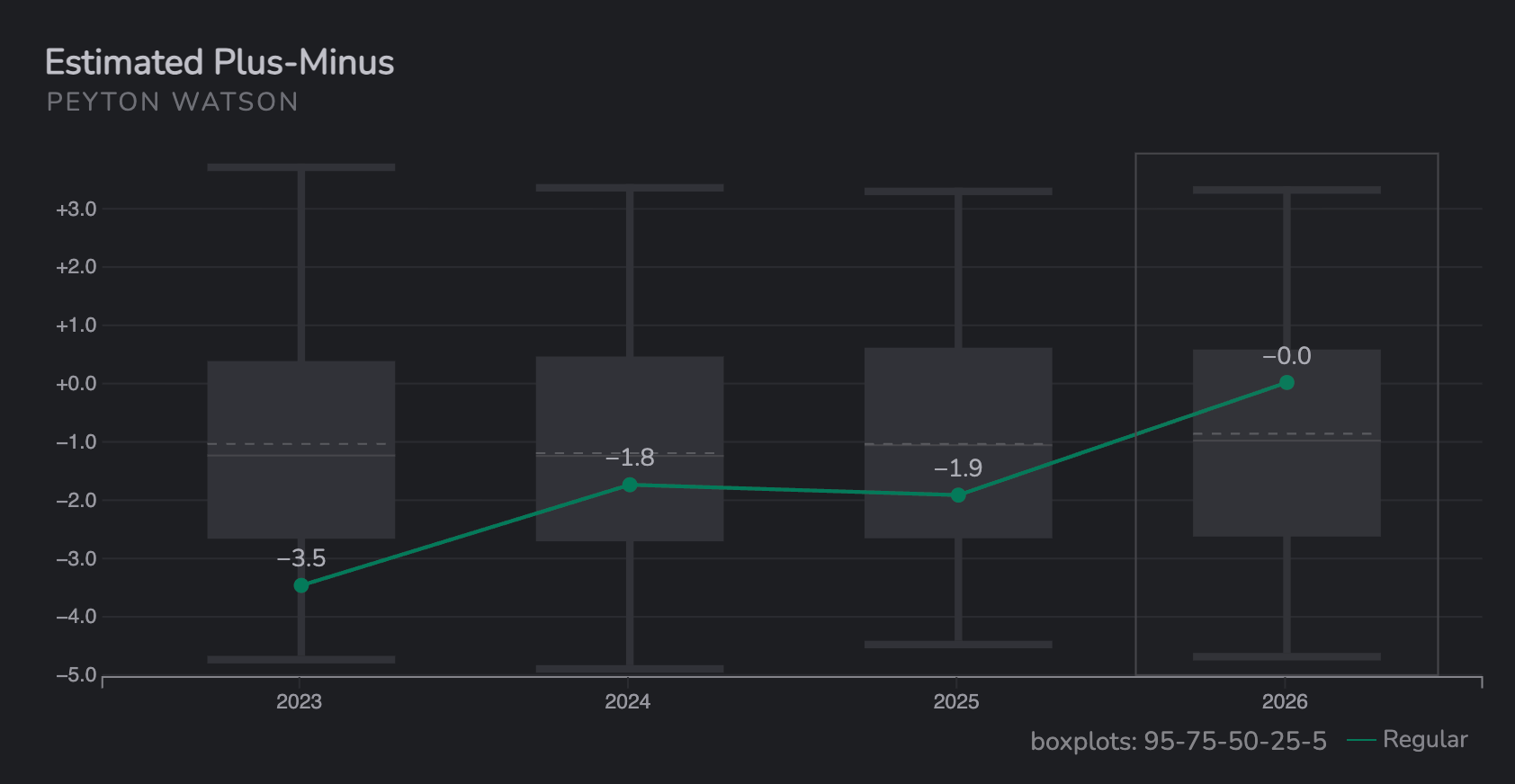
The highlights and overall stats suggest a player with real star potential that simply needs to be unleashed. The question is what is Peyton “worth” from an objective market standpoint, and how much should the Nuggets try and re-sign him for, and those are two very different questions.
First, I want to talk about Watson and his game.
THE HIGHLIGHTS AND VALUE ARE IN OPPOSITION
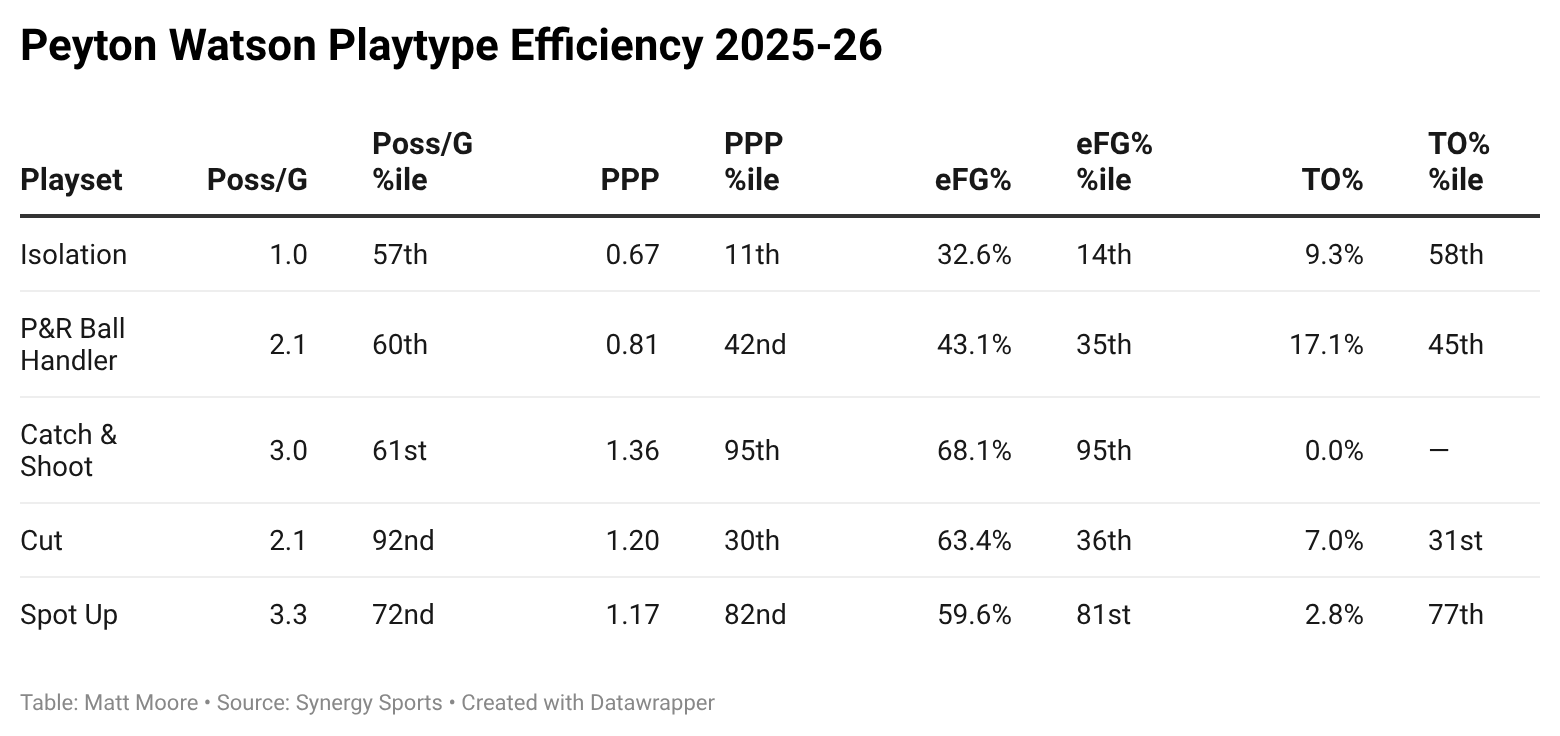
The idea of Watson this year is that he developed into an explosive on-ball threat capable of creating on his own, a potential All-Star with defensive chops.
But this is inaccurate. When Watson was tasked with on-ball creation, he created at an 11th percentile efficiency. When he operated in pick-and-roll, he was at 42nd.
Handoffs aren’t listed here, in part because he only had 39 total possessions out of them this year, but he also only scored in the 42nd percentile on those.
His turnovers were a major problem. As the pick-and-roll ballhandler, he was just 45th in turnover percentage. It wasn’t that he was awful turning the ball over, except on spot-up drives, it’s that his efficiency didn’t make up for the turnover rate.
But as an off-ball weapon? He was great, particularly as a spot-up shooter. In fact, Watson was the third-best catch-and-shoot player in eFG% this season with a minimum of 150 attempts.
In short, Watson was sloppy with the ball, but elite punishing teams off the Nuggets’ gravity with Nikola Jokic and Jamal Murray.
One of the many mixed results sets for Watson was at-rim plays.
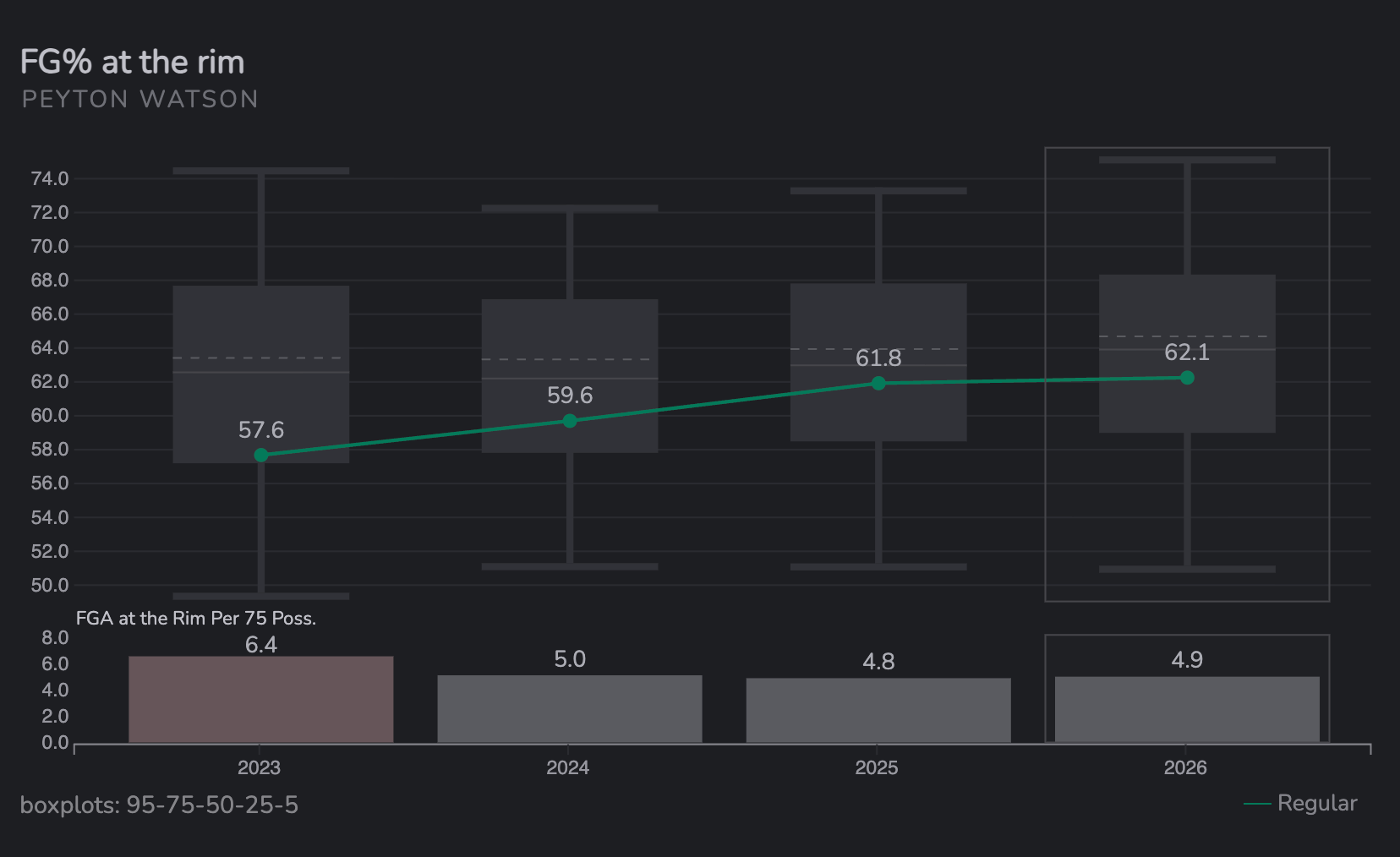
The eye test matches these results. His handle is disrupted by help defenders and he had a hard time getting through multiple levels of defense to score at the rim, but he was red hot as a shooter off-ball and still athletic enough to finish at an average rate. (Watson was 42nd percentile at the rim.)
But what does this player actually look like?
I decided instead of finding similar players at his age I’d look at the player he is now, and see what those players look like this year, then go back and find what those players looked like at Watson’s age.
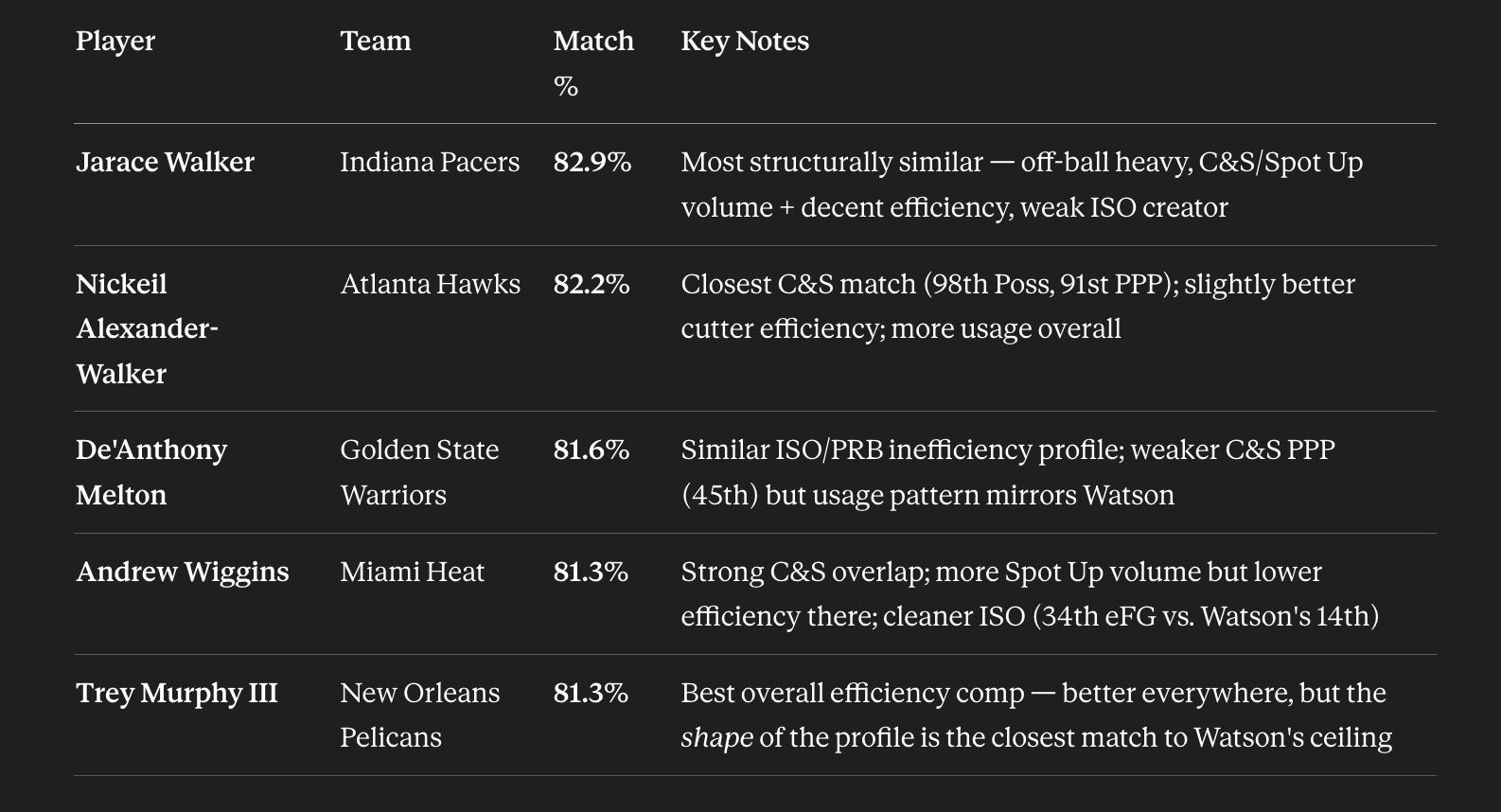
Trey Murphy and NAW are obviously the most exciting comparisons there.
So I looked at what those players looked like at Watson’s age (24):
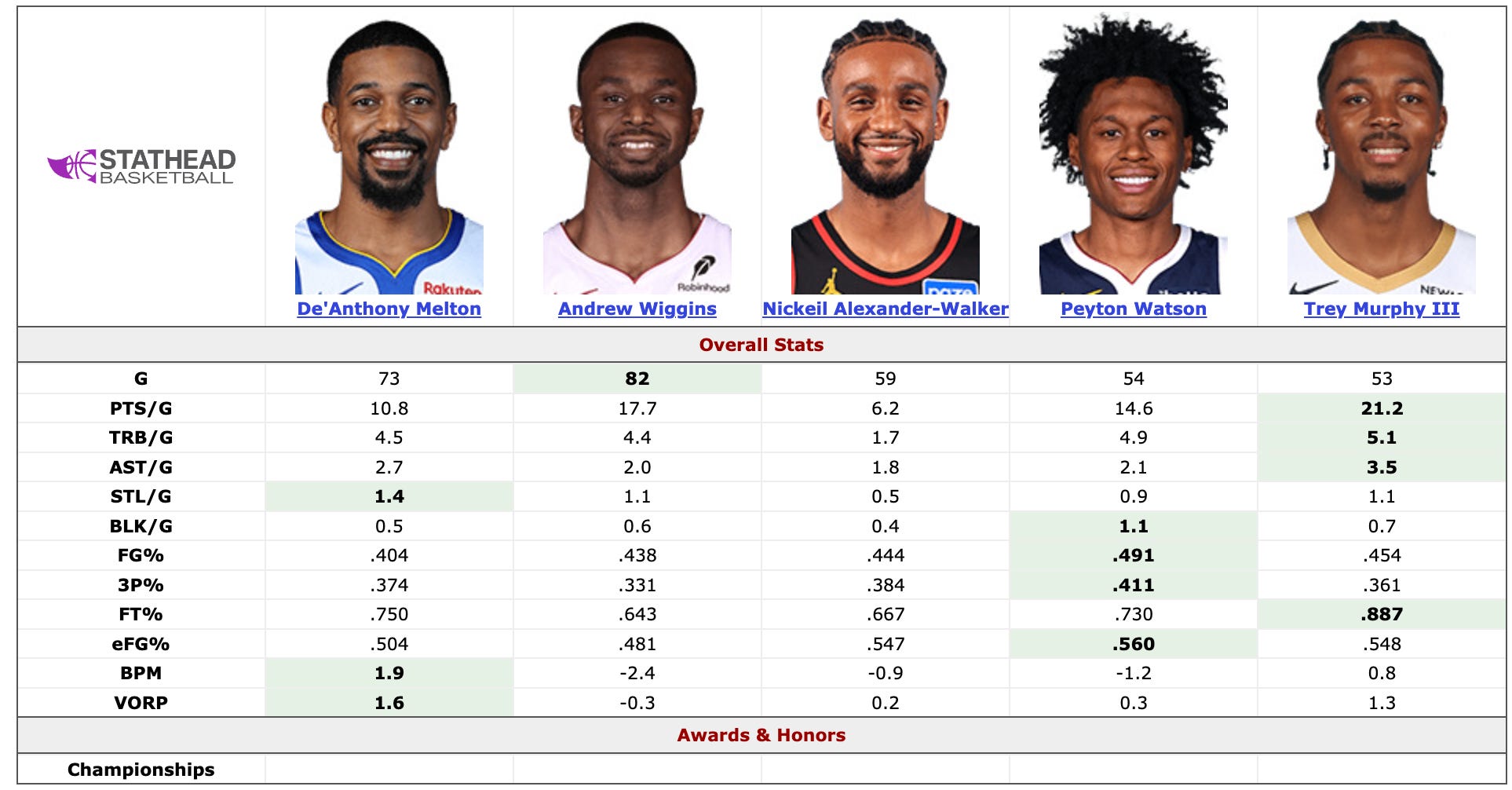
Pretty encouraging! Murphy is obviously better by a pretty significant degree with his ability to create and handle efficiency with higher usage. Melton before his injuries was on track to be a really good playmaker and shooter in more of a pure point role.
Wiggins was an uninspiring No.1 overall pick who mostly scored on volume and wasn’t really all that much of an impact player until he moved into a 3rd or 4th best player role.
But let’s focus on NAW and Murphy.
In 2024, Murphy signed a four-year, $112 million extension off his rookie deal. That’s $28 million AAV. In 2025, NAW signed a four-year, $60 million deal with the Hawks.
The best way to kind of position this is that Watson is better now than NAW was at 24 (NAW actually bounced around until he landed in Minnesota), and worse than Trey Murphy was (even with efficiency vs. usage factored in).
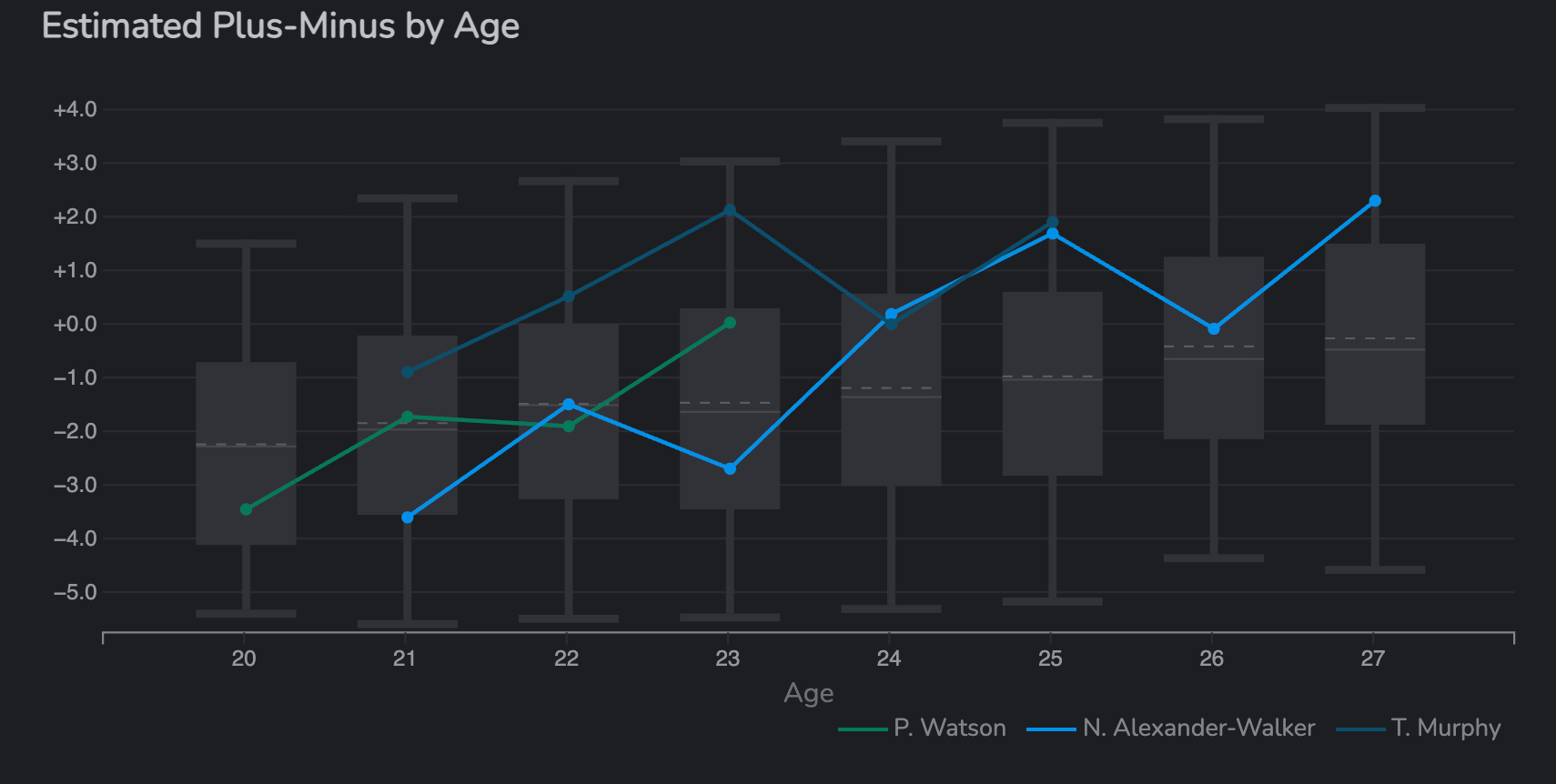
Look at that, Watson is above where NAW was and behind where Murphy was, but his trajectory changes a lot it. If he dips? He’s worst than both next season. If he continues this trajector? There’s a chance he’s better over the next three years than either one.
He’s somewhere between those two players. If you think he’s closer to Trey Murphy in potential, you aim for $22-$28 million. If you think he’s closer to NAW, you aim for $15-$21 million.
Me? I think I land smack dab in the middle at $21.5 million.
Watson is not as good as NAW is now:
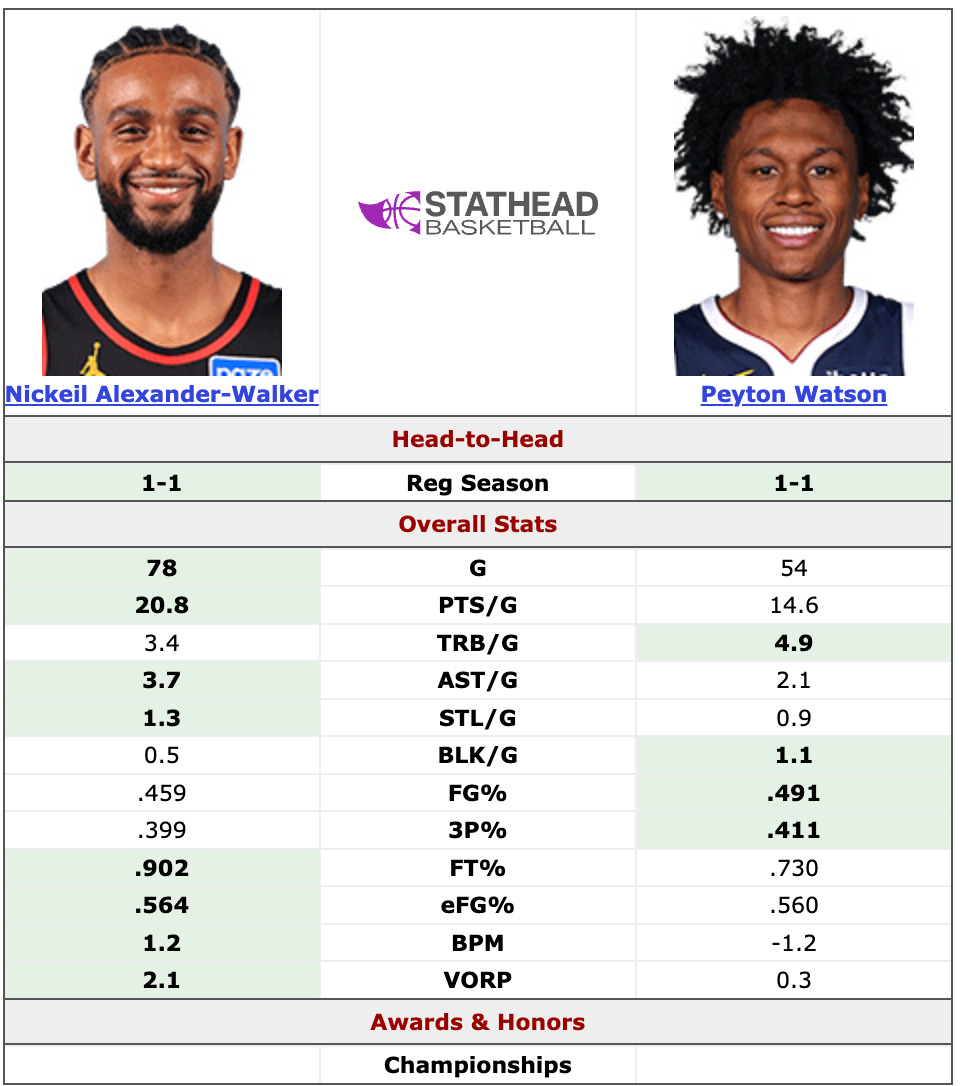
But that’s NAW in a much-expanded role with more years of experience. For example, compare Watson now to NAW in his last year in Minnesota at age 26, so less than halfway through what Watson’s five year deal would be:
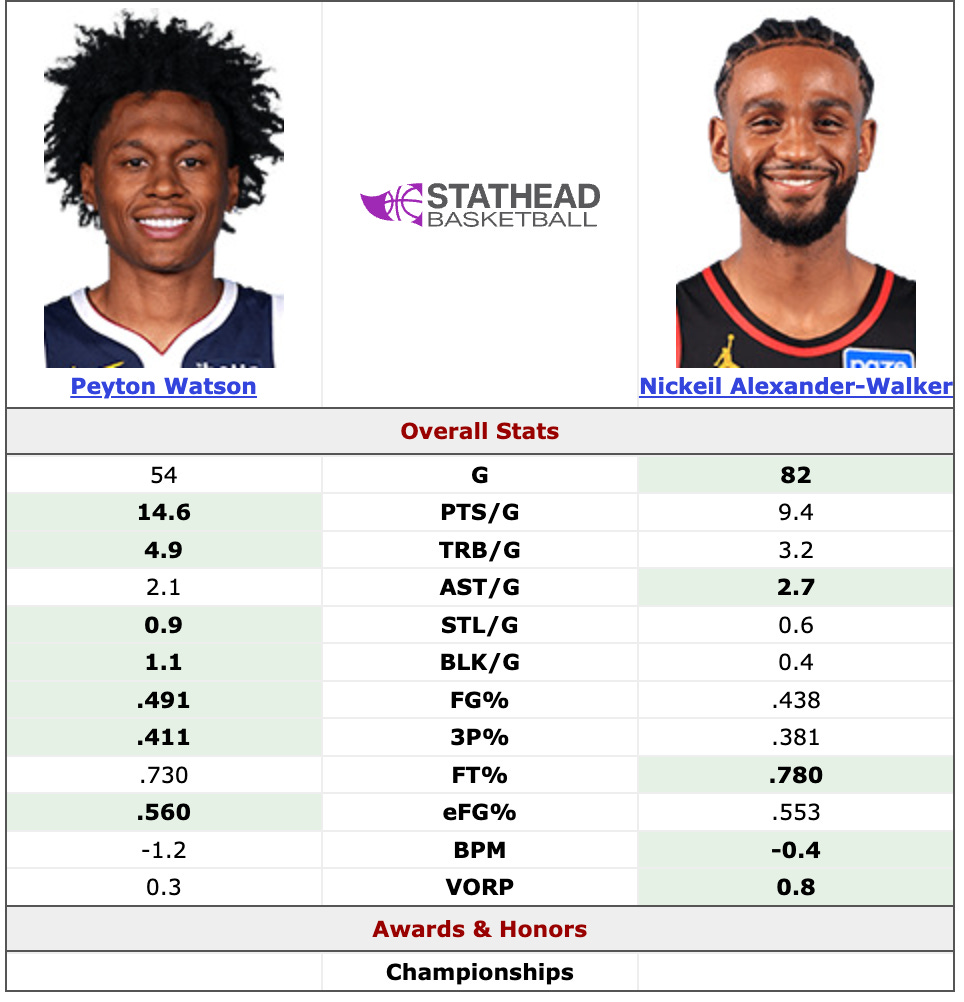
That’s pretty interesting.
But on the other hand, part of NAW’s value is the contract. NAW as a 21-4 elite defender at $15 million is so much more valuable than NAW as a 21-4 elite defender at $22 million or $28 million.
Was NAW worth $22 million this year? Absolutely. Will he continue to be worth it? Is having him in this role a piece of a championship team or does he need to do less and be more of a role player? If that happens, the value on him gets lower towards his actual AAV.
Waston also has to improve as a defender.
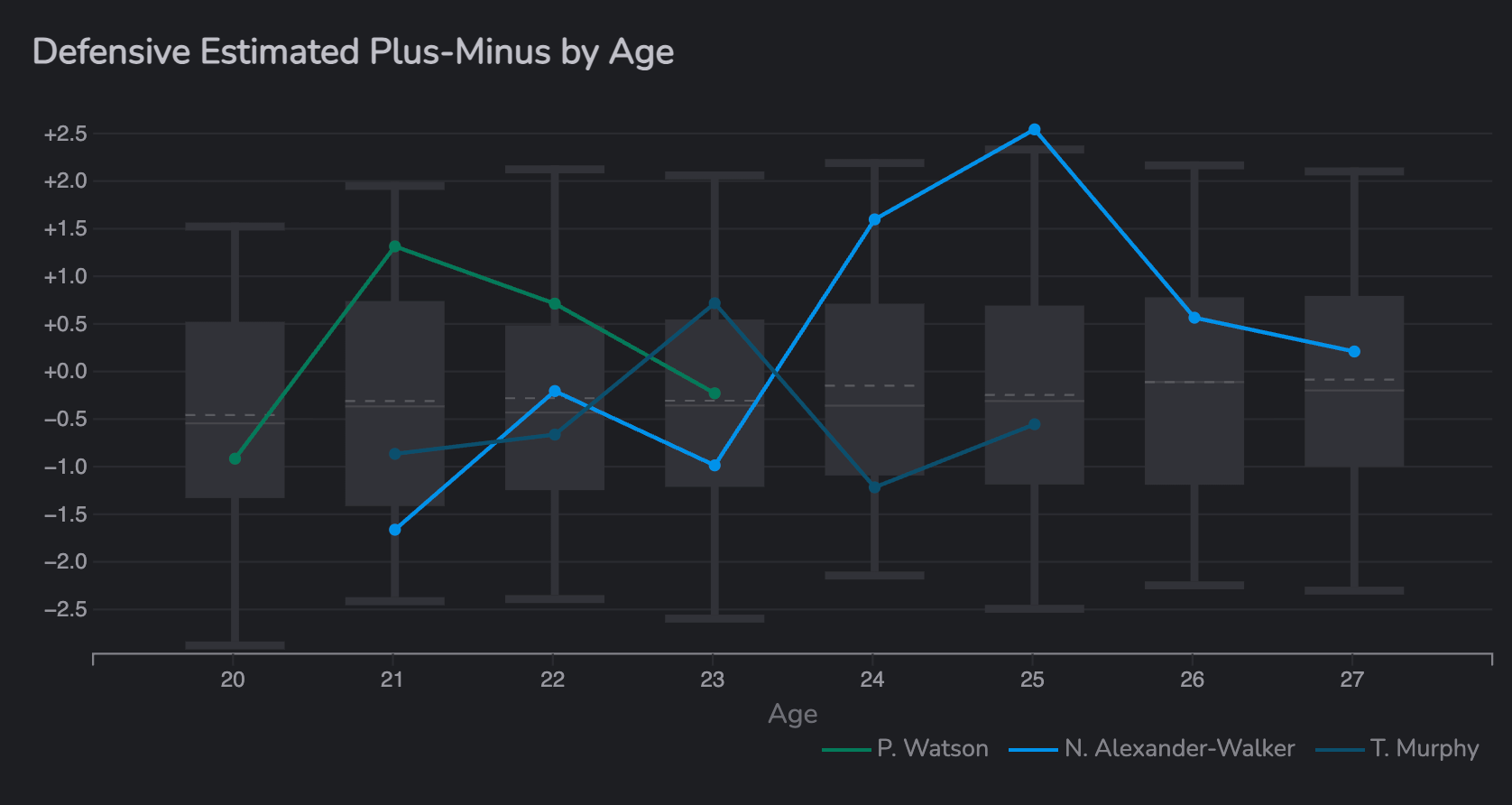
Watson was a better defender this season than NAW was at this age, worse than Trey Murphy was at this age. He also dipped year over year, but was still higher in Defensive EPM than Murphy was either of the last two seasons, while NAW also dipped when he took on more of an offensive role.
If Watson continues to slide defensively , he winds up as bad as Murphy defensively and not as good offensively. But if he develops on both ends, he can be better than both.
An important element in this is something fans struggle with: you’re paying a player over what you expect over the life of the contract. It’s not based on the last year or years as a reward; it’s what you expect from them going forward.
Right now, Peyton is very much worth the four-year, $60 million deal the Hawks gave NAW and very much not worth the four-year, $112 million deal that Murphy got.
Do you believe he’ll be better than Trey Murphy by the end of his contract? Do you believe he’ll be worth less than NAW? Bear in mind that NAW was a more impactful and overall better player than TM3 was this season.
But of course, that’s about fair value. Not restricted free agency.
The Nuggets have the right to match any contract offer for Watson and retain his rights. They do not have to lose him for nothing. They will always have the option of retaining him. The question is how much they should use that mechanism to do so, and at what price?
